ISO 20816 severity classes
Alongside AI anomaly detection, Treon Connect can flag machines against standard vibration limits defined by ISO 20816 — the international standard for evaluating machine vibration.
What the classes are
ISO 20816 groups machines into classes by type, size and mounting (for example, a small direct-coupled motor is a different class from a large machine on a flexible foundation). Each class defines velocity-RMS zones — broadly:
- Good — vibration typical of a healthy machine.
- Warning — elevated vibration; monitor and plan.
- Alert — vibration high enough to risk damage; act.
By assigning the right ISO class to a machine, its Warning and Alert thresholds are set for you from the standard, rather than guessed.
Assigning a class
You assign an ISO class (or a custom class with your own thresholds) to an asset in the Classifications part of the Assets application.
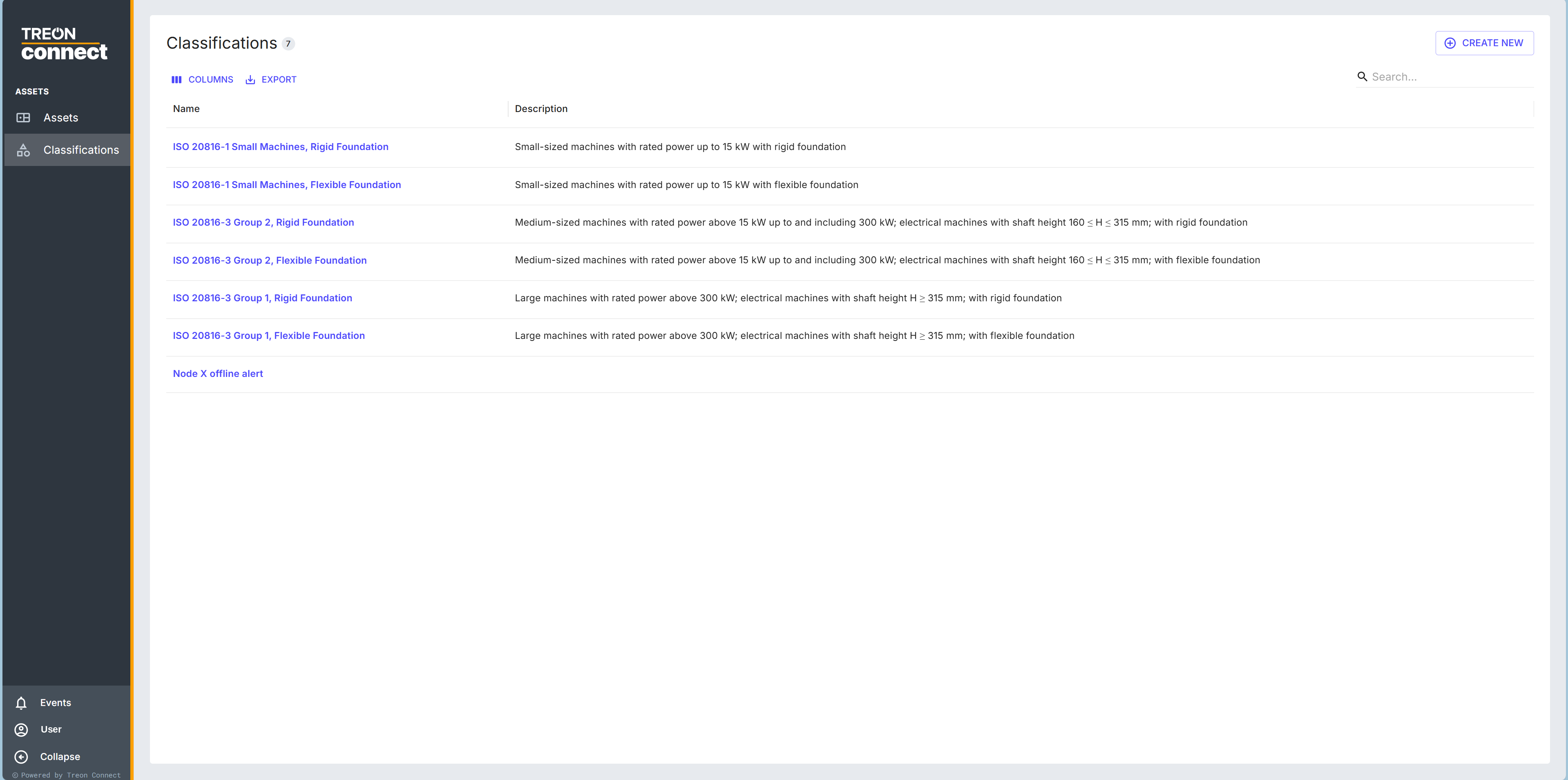
Once assigned:
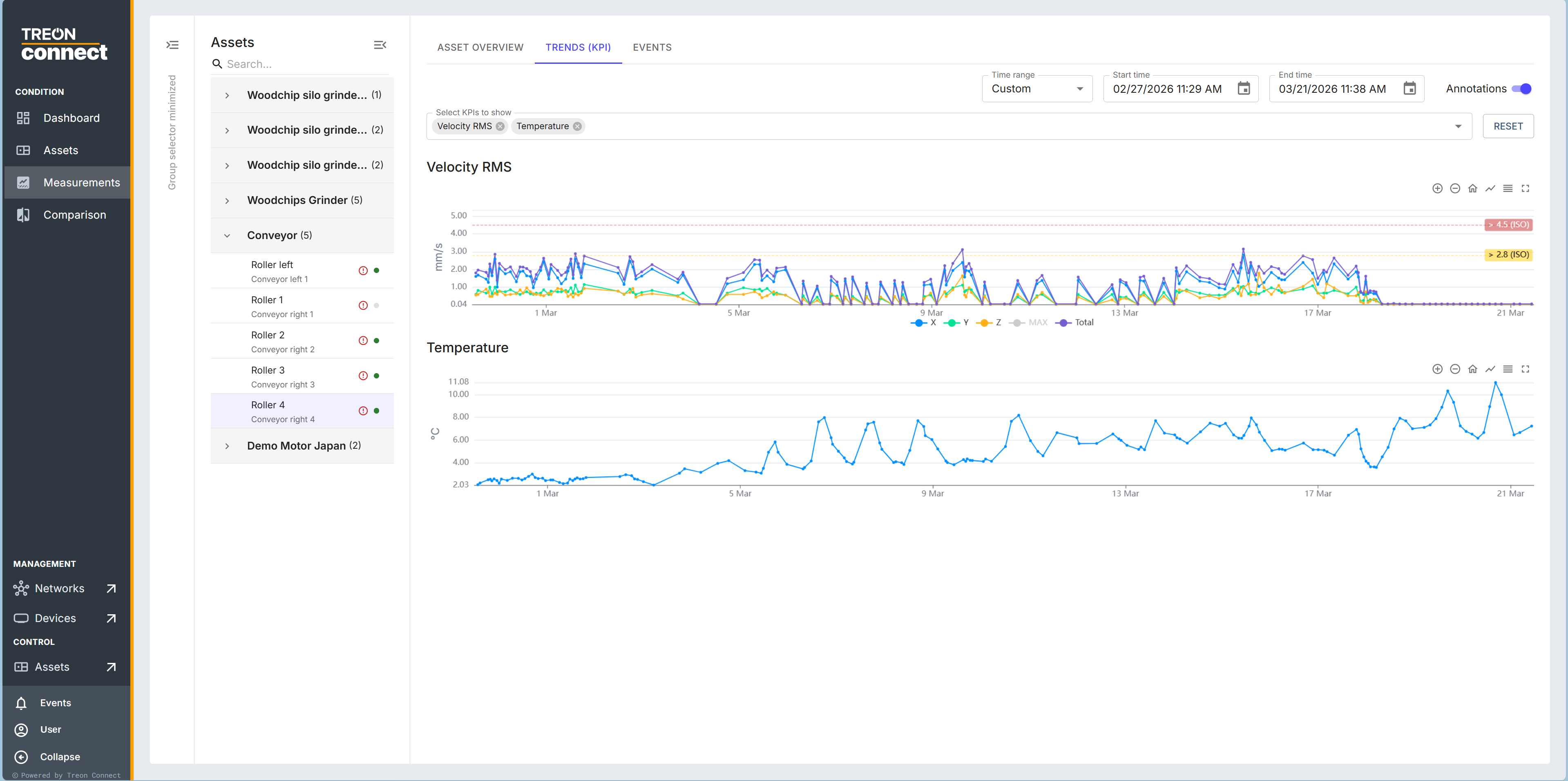
- The class's thresholds drive Warning and Alert events on the machine's velocity RMS.
- The thresholds are drawn on the velocity-RMS trend, so you can see how close a machine is to a limit.
Not every machine suits ISO limits
Check the machine's normal vibration level before you assign a class. If a healthy machine already runs above the class's Warning or Alert limit, an ISO class is the wrong tool: it will sit permanently in alarm and tell you nothing. That happens often enough on older or structurally noisy machines to be worth checking every time.
For those machines, rely on AI anomaly detection, which learns the machine's own normal, and set manual thresholds from the observed baseline if you need a fixed limit as well.
ISO limits vs AI — use both
ISO limits encode general engineering experience: they are a sensible floor for "this is too much vibration for a machine of this type." AI anomaly detection adds the per-machine dimension: it catches a machine drifting from its own normal even while still inside the ISO "Good" zone. Running both gives you standards-based limits and early, machine-specific warning.